25 June 2016

Koval Distillery's "Millet" Whiskey

The Koval Distillery makes a diverse amount of Spirits and I have been lucky enough to have been send Four Samples of their drams by the kind people of Haromex.


From the Koval Distillery samples were send of:

First dram I will try is the Millet Whiskey. It is made from a mash bill that consists of 100% Millet, which in Dutch translates to "Gierst". I mention this because I'm Dutch and this is my blog. :) Call it a reminder to myself.

Short information list about the Millet Whisky:
  • It's organic.
  • It's kosher.
  • It's "Gluten-free". (Question to myself: Isn't all Whisky "gluten-free?)
  • It's family owned by Robert and Sonat Birnecker.
  • It's independent.
  • It's 100% organic Midwest Millet mash.
  • It's fresh American Minnisota white oak.
  • It's 40% ABV, 80 proof.
  • It's 0.5 Liter per bottle.
  • It's unchill filtered.
  • It's natural colour.
  • It's from Chicaco in the USA.

Just from this short list I am already enthusiastic because I love small independent openminded innovative distilleries ran by, well, Cool Folks!


First impression I had when smelling this dram was one of wood influence. The Roundstone Rye I smelled from Catoctin Creek had a much more Spirit Influenced nose (I think). This nose is quite different. I did feel some kind of spices alcohol tingle in my nostrils that I will need to smell again to make out if this is the millet or the alcohol. A nose that I could not quite put my finger on until I thought "banana". No Solventy notes. No medicinal notes. There is a definite spice/ethanol influence. I had the impression that this is quite simular to a single malt like Corsair Triple Smoke. I will have to smell side by side to investigate.

The taste is a mix between the wood influences you get in a fresh American white oak barrel matured dram. This is my current evaluation of the "wood" influence on a dram. I will compare more to be sure this is "accurate".

Do I like this dram? Yes I do. It is absolutely a "must taste" if you want to learn more about the actual influences of grains compared to woods. Expect a dram that something between a Single Malt from Scotland (but with more wood influence) a Bourbon (but without the corn sweetness). It is not really comparable with a 46% ABV rye since it's missing the overpowering spices such like white pepper. There is a hint of pepper in this, but the main influence in this would be the banana nose.

This tasting helps me understand the influence of wood and grain better. It will also help with my investigation into the actueel Sherry influence of "Sherry matured" drams.

Questions that I have about this dram
  • How long did it age for?
  • What was the Char?
  • What was the size of the barrel?
I got some of the answers strait from Sonat, the owner of Koval. She told me on Twitter that Koval uses 30 Gallon, Medium Char barrels for all their expressions. 

Tasks I set myself to
  • Compare to other 100% mash bills to see how the barrel is a constant and which notes are then from the millet. See my Bourbon Whisky blog for notes on it.  
This task has not been done yet, but the Scotch Test Dummies did a comparison in the video you can find below. 

There is lots of information out there about the Koval Distillery but one site https://oukosher.org sums it up quite nicely:

Koval is a Yiddish word for ‘blacksmith’ or ‘to forge,” but the term has also been used to refer to someone who does something out of the ordinary, or a “black sheep in the family.” It is thus fitting that Sonat Birnecker Hart and Robert Birnecker chose to name their company Koval, since it is not every day that one hears of a Professor of Jewish Studies and a Foreign Deputy Press Secretary leaving their careers to make spirits. Indeed they named the company after Sonat’s great-grandfather, a renegade in his own right, who left Vienna at the turn of the century for Chicago at the age of 17, in search of a new way of life, much to the dismay of his parents and gratitude of later generations, earning him the soubriquet, Koval.

More information about the background of the distillery can be found in some of the video's below.


24 June 2016

"Scotch Whisky" no longer legally protected?

As of the 23th of June 2016 the legal protection of "Scotch Whisky" has been voted to the history books by the people in the United Kingdom. Not by the Scots mind you, but by the baby-boomers in England and Wales.

As up to the 23th of June 2016 the term "Scotch Whisky" was protected by the Regulation (EC) No 110/2008 of the European Parliament and of the Council of 15 January 2008 on the definition, description, presentation, labelling and the protection of geographical indications of spirit drinks and repealing Council Regulation (EEC) No 1576/89. See my blog about this, now "obsolete", Law.

This is no longer true.

Since the United Kingdom laws on "Scotch Whisky" is layed down in : 2009 No. 2890, FOOD, The Scotch Whisky Regulations 2009 which only has status because it is mentioning the EU 110/2008 regulation there is no longer a valid legal definition of Scotsch Whisky and there is also no longer a protected status.

The Scottish people will have to renegotiate the legal protection of "Scotch Whisky" with all nations again. I do wish them good luck, but for now it seems I, or anyone else, will be able to make "Scotch Whisky" right here in Holland! Nothing to hold me back anymore since I'm not actually in Scotland. 

I am aware of the fact that the UK is not actually out yet, but since the England has voted to leave it is only a matter of time before I can legally produce "Scotsch" in Holland.

No worries guys, I'm only joking, but some companies outside the UK might jump at this.

23 June 2016

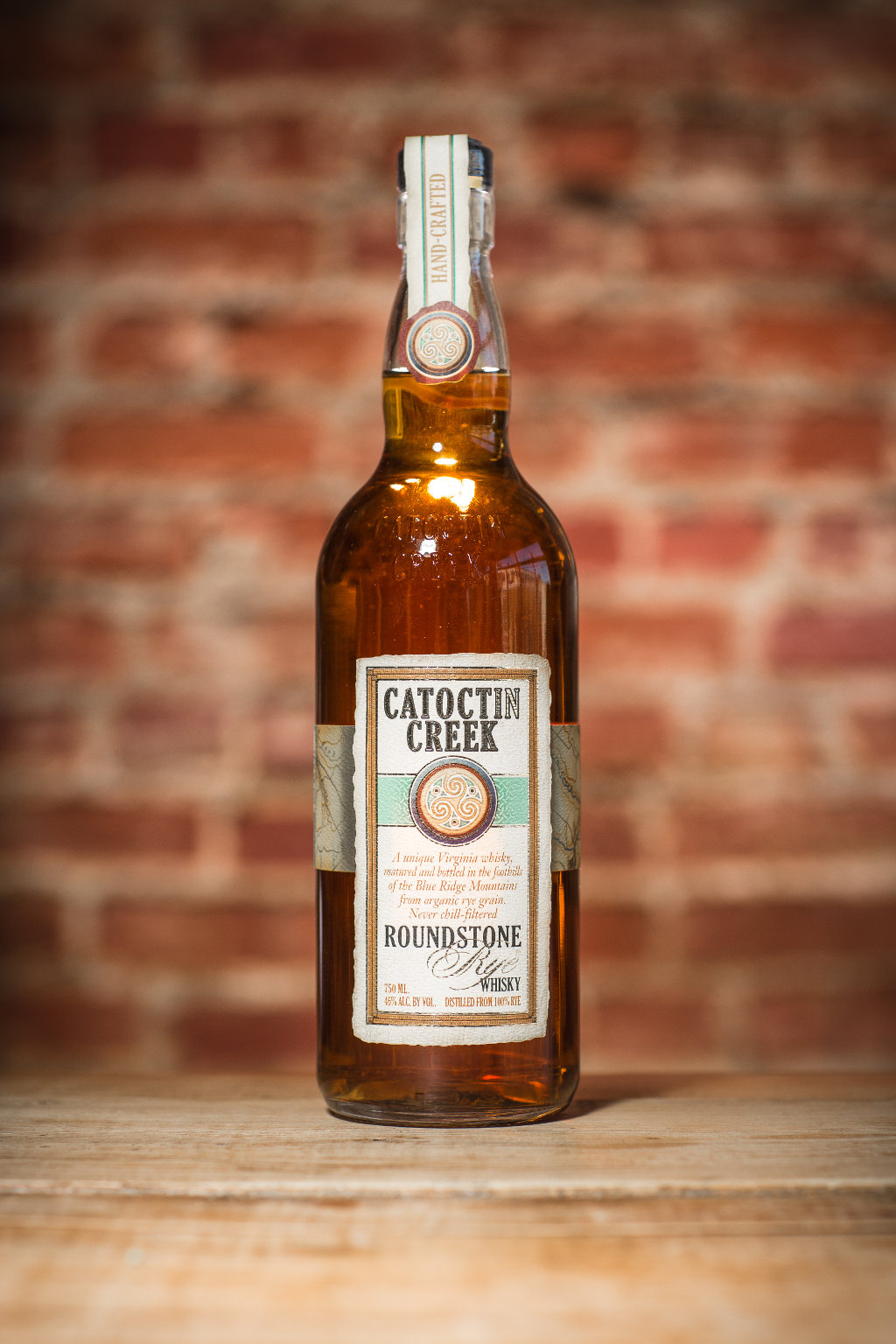
Catoctin Creek Roundstone Rye

It's organic.
It's kosher.
It's family owned.
It's independent.
It's 100% organic rye mash.
It's fresh American Minnesota white oak.
It's 40% ABV, 80 proof
It's unchill filtered.
It's natural colour.
It's from Purcellville in the USA.
It's Catoctin Creek Roundstone Rye

After pouring a dram I sat down to smell and taste it.


First impression after cleaning my palate with chocolate and a good rinse of water is very interesting. Nothing like I have ever tasted. 

Smooth, spices I like, no "bourbon" sweetness, dry?, rye smell mixed with smell I know from my work but can't put my finger on (Calque drawings cub board), citrus fruit (not sure which) , white pepper, galia Mellon, liqourice? No noticeable smoke. Spice in the finish that's really pleasant for me.  

First thoughts are I like this stuff! It's spicey what I like, warming at the swallow and long after. It lacks the overly sweetness of bourbons. This totally blows my sherry theory out of the water, unless the rye is of such influence that it overpowers wood influences that are alcohol interactions with a fresh American oak barrel. The alcohol in this is smooth, it doesn't overpower the taste and mouth by numbing it. I actually like this and it's a surprise! Nothing like a bourbon, nothing like a barley single malt, but with recognition of notes that I know. 

Questions to answer

After first tasting this dram I formulated some questions:
  • Is the rye influence so big it overpowers the wood influence? 
  • How big is the wood influence? 
  • What was the Char level?
  • What was the barrel size?
  • How long did it mature? 
  • Where did the pepper (nose and pallet) come from? 
  • What if I taste this side by side with a sherry matured whisky? 
I asked the distillery if they could take a look at my questions and could provide an answer. They did:
  • Is the rye influence so big it overpowers the wood influence?  Yes, we are grain-forward, which you get with a younger whiskey. 
  • How big is the wood influence? Hard to give a number, but I'd estimate 60/40 for rye/wood.
  • What was the Char level? 3 as you know.
  • What was the barrel size? 30 gallon, Minnesota white oak.
  • How long did it mature? <3yo +/- depending on weather.  It varies batch to batch.
  • Where did the pepper (nose and pallet) come from? Characteristic of rye grain... same peppery note in pumpernickel --same grain!
  • What if I taste this side by side with a sherry matured whisky?  Then you will have a very good time. Sláinte, prost, and cheers!
The answers sparked three more questions:
  • What does "Grain-forward" mean?
  • What is Minnisota White Oak?
  • What is pumpernickel?

The aging is "about two years". Please see statement by Scott Harris in the video link 

What do the answer to the questions allow me to learn?

I have also tasted a Koval "Millet" Whisky and from this I learned that the grain is, or can be, of significant influence in the total taste of a dram. If Rye, at 60/40 influence has the highest influence as a grains, then it follows that something else is on the other end, but the on the wood influence scale. Which one I'm don't know yet, but the "Millet" and "Corsair Tripple smoke" are the ones I am looking at now.

Roundstone Rye 92 proof

The immediate nose is banana, the rest of the nose is there as it is in the 80 proof, but more spicey. The added 6% of alcohol gives a nice oomph that I absolutely like without numbing the palate. I have a light preference for this expression over the 80 proof because of that. 


Roundstone Rye Cask prood

This dram tells me the others were initially at 58% ABV and were bottled at lower strenght. How does this help me? It helps me because I now have a reference of how a 58% ABV rye spirit reacts to a level 3 char 30 gallon American White Oak barrel.


This dram has all the other two in it and more since you will be able to play with the ABV as you see fit. Find that sweetspot you like. Is it worth the extra money in order for you to water it down if you see fit? I cannot answer that question, but I do know you have the option.

If you want to try this dram for yourself please check my "hunting for" blog for online retailers http://iladdie.blogspot.nl/2016/04/hunting-for-cotactin-creek-roundstone.html?m=1

More to come later! Fun stuff!!

As a Dutchman I have no trouble pronouncing Catoctin, but if you want to find out how it's done please check the video below.


For more about the Distillery 


This video from the Whiskey Guy is also highly interesting


Innovative Whiskeys From the USA

I'm blessed with having been send 12 samples of Whiskey/bourbon/rye made by some of the innovating distilleries in the USA! All for educational purposes off cause! 

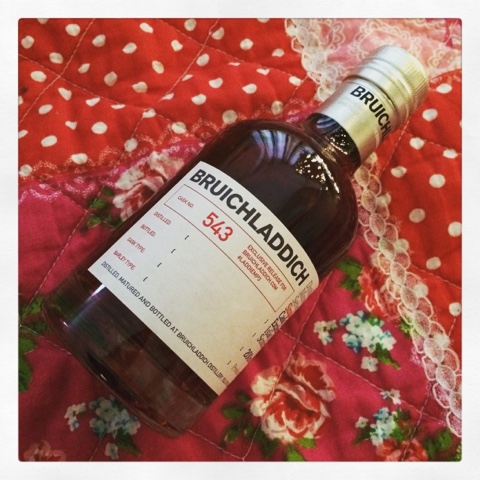
Just to share what a vast amount of studying material I have been send I'm posting these photos below as a thank you to the kind Lads that send them to me! 


The samples were generously send by the Guys from Harimex Development which imports and wholesale a large gamma of drinks. Please see their website http://newsite.haromex.com

From the Koval Distillery samples were send of:

From the Catoctin Creek Distillery samples were send of:
  • Roundstone Rye, 40% ABV, 100% Rye,
  • Roundstone Rye 92 proof, 46% ABV, 100% Rye, Distiller's Reserve
  • Roundstone Rye Cask proof, 58,9% ABV (depending on the barrel), 100% Rye
Review can be found in this blog : catoctin-creek-roundstone-rye

From the Journeyman Distillery samples were send of:

What do I hope to learn from these Whiskeys?

  • I have compared the new make journeyman with the end product. You can read about that here. The difference between new make and the final product is rather big! 
  • I will compare these with the American Whiskeys I already own, Corsair Tripple Smoke, Noah's Mill and Elijah Craig 12 years.
  • I will compare all the rye mashbills and see how 51% rye or 100% rye influences the pallet.
  • I will see if what I learn tells me something about the wood influences found in "sherry" matured "scotch". This I'm (still) investigating in another blog

  • I should get more information and know how about how all these different corns and malts and grains influence the end result.

Blogs to investigate this task are :
Koval "Millet" : Koval "Millet"
Catoctin Creek : Roundstone Rye
Corsair Distillery: Triple Smoke

Lastly I will probably have loads of fun exploring the distilleries that have produced these drams and seeing what makes them unique!


20 June 2016

The Whisky Experiment

I'm (planning on) conducting a Whisky maturation experiment. It's not going to be an experiment that is going to hold up scientifically but it's going to be fun non the less.

What I want to do is finding out what the difference will be between a fresh American Oak matured new make malt spirit and a sherry matured new make malt spirit. 

What I will first do is mature new make single malt spirit in a fresh American Oak Barrel. 

To do this I bought a barrel and new make spirit. 


First thing I noticed was a slight rattling of something inside the barrel. After shaking it out it turned out to be some left over wood from drilling the bung hole.


First question that pops to mind is:
- do I rinse this out and with what?

The experiment has progressed as far as this. Updates will follow as they come depending on my discipline and opportunity to actually write something new 😋


11 June 2016

Is "Sherry" matured "Whisky" equal to "Bourbon"?

The answer to the question in the title is no, or it is? Is there a partial truth?

In my Quest to understand whisky I have been asking myself questions.

The answers to these questions have sparked more questions. The question formulated in the title of this blog has been sparked by my explorations into the "Sherry" influences on "Whisky" blog I wrote earlier. 

The that sparked that blog was:
  • Can the "Sweet" notes found in "Sherry" matured "Whisky" be better explained by saying it's actually more comparable to a "Bourbon" than a "Sherry matured Whisky"?
To answer that question I first need to answer other questions. Questions like:
  • What is "Bourbon"?
  • What is "Whisky"?
  • Why is "Whisky" different from "Bourbon".
  • What is "USA Single Malt" Whiskey?
  • Which tastes are unique to those styles and what does it say about the influence of barley, American Oak and refill times on those tastes? 
  • What is the influence of Alcohol % on flavour extraction from the cask?
  • What is "Sweet"?
  • Can humans smell "Sweet"?
  • Can humans dicriminate between "Caramel Sweet", Fruit "Sweet" and "Sugar Sweet"? 
  • Is the "definition" of "sweet" dependent on the "Social group" you are part of?
One of the, supposedly, best examples of a "Sherry" influenced Whisky is the GlenDronach 15 YO revival. Listen to the bourbon references Ralfy makes in this Vlog.


Taste and smell in "sherry", "single malt" or "bourbon" whisky can only come from four factors. 

Factor one is the "cask". 
Factor two is the "liquid". 
Factor three is the "air".
Factor four is "time". 

One could say that solving the influences of the factor "sherry" in "whisky" is like solving a factor in a mathematical equation. 

In solving a mathematical equation there is the way the equation is written, the constants, the variables and the multipliers (x / - + etc). 

Every mathematician knows that some equations can not be solved with too many unknowns.

Simplified a formula for whisky could (I don't presume to know) look something like this:

Whisky = Cask x Liquid x Air x Time

A formula for the cask could look something like this:

Cask = Wood x Size x Charr 

A formula for the liquid could look something like this:

Liquid = Mash Bill x Production choices x Productions tools x Yeasts x additionals 

Air = humidity x air pollution x temperature x pressure x oxygen/nitrogen 

Time = time 

For sake of this blog lets us assume that the factor "Cask" is a constant (which it isn't) as a New Make Minnesota white Oak 30 gallon barrel, charred at level 3. I selected this "constant" since I found out that multiple craft distillers use this type of Barrel. (And I happen to have multiple drams make in such barrels)

Let's also assume that the factor liquid is a constant by using the BruichladdichIslay Islay Barley trickle destination proces or the Koval stills made by Kothe.

Notice that the influence of previous content in the barrel has not been added to the equation of "cask" nor to the equation of "liquid". 

Previous content is either a additional constant in the total whisky formula, and/or it has not been added to the formula for "liquid" and/or "cask". 

In order to know to which part of the formula the "previous content" needs to be added more questions need to be answered. 

What is previous content?

As a mathematical formula one could say: 

Previous content = free flowing content + absorbed content in the (wood of the) cask 

This sparks more questions. Is the free flowing content part of the barrel content when "whisky" is added? The answer for "scotch whisky" MUST be no, since additions to whisky are prohibited by both European and UK laws. 

This reduces the formula for previous content to: 

Previous content = absorbed content in the (wood of the) cask

How did the previous content get into the cask? 

Did the previous content change, add or retract flavour components to the cask?

If the previous content "adds" to the flavours it must be "inert" in order for it to only "add". 

This leaves "change" and "subtract" 

Change and subtract are dependent on the influences of time, solvents, reactants, catalysts, oxidatives etc.

One of the solvents is water, the other is alcohol.

The text below is derived from a book I'm reading: 

The importance of wine contact has not been established. Constituents of sherry have been identified in whisky matured in sherry casks, but their sensory impact, if any, has not been established. 

This is not an option but a fact documented by people with mush higher academic degrees than me. Do I agree? I will find out! Ha! 

In a most interesting study to show if Scotch matures in Sherry casks is Kosher rabbi Akiva Niehaus does extensive research  into the left over Sherry/wine in a cask. This study can be found here. I think the conclusion is that Sherry matured Scotch is not kosher, meaning there is a transference of the liquid in the wood structure from the cask to the spirit. 

What is the influence of ABV on flavours extracted from the cask?

Questions I asked:
@"bourbondistillery" do you know if there is a relationship between alcohol % and taste extraction from new American oak?
Answer:
@iRomby High alcohol concentration will extract more compounds and color, so it will also extract more tannins, causing a harsher flavor. That is one of the reasons we barrel the whiskey at 113 to limit the extraction on our 30-gallon barrels.

This answer by one USA distiller indicates  that, in practice, there is a relationship between ABV and how many favours are extracted. 

I already knew that barrel size has an influence. So one more parameter to add to the equation.

Flavour = time x cask x liquid x interaction x catalysts + absorptions

Interactions can be:
- recombination
- degradation
- reactions
- solution
- dilution 
- suspension
- absorption 

Work in progress 

Can humans smell Sweet?

In response to this blog one blender gave  this insight in relation to this question.

I was always told that you can't smell sweetness. If you dissolve sugar in water it doesn't smell sweet. However we can smell ripeness (of fruit) and other elements, which give us the impression of sweetness.

Personal insight into "PX sweet".

To try the "sweetness" of "sherry" I bought a bottle of "PX sherry" and putt it in my glencairn. 


To be honest, I can't smell the sweetness. I smell something like ... I don't know what I smell but it's nothing like what I smell in "PX sherry" matured whisky. 

Highly concentrated raisin, red grapes, syrop. Something nutty, yes, but fat nutty. Taste is syrop, lots of non fruit sugar. 

Personally I don't like it one bit. Reminds me of overconsentrated children's limonade made from syrop not made from fruits or berries but more like rose-bottles or cauth syrop. 

One thing I am sure about. When the nose of this PX sherry hit me my first instinctive reaction was not whisky or anything remotely bourbon related.

After tasting some more I actually reacted with goosebumps and a foul taste and shaking my face. This stuff is nothing like the DenHool or Laddiemp3 sherry matured whisky. 


Since this is my opinion it's open to development of my palate and nose. So I will keep an open mind towards the "PX" influence, but for now I reject the "sherry liquid" influence as being the main driver in a sherry matured whisky. I would now guess that 90% is from the wood, 10% sherry liquid (want to say 0% but keeping an open end".

As Another test, to validate the wood influence, I compared the Corsair Tripple Smoke Single Malt from the USA which was matured in 15 gallon new make American wood to "sherry matured" whiskies. The recognition with the sherry matured laddieMP3 for instance is almost instantaneously. 


I bought the Triple Smoke by Corsair especially for trying out a single malt matured in fresh American Oak to try first hand the influence of fresh American Oak on a Single Malt. Almost the same nose and palate. This again leads to an insight that the "American Oak" influence is much more prominent than the "sherry notes" that are left in the wood. 

To keep an open mind I will keep second guessing this insight and will try to disprove it. 


Work in progress 

10 June 2016

The influence of "Sherry" on "Whisky"

I recently tasted a sample, generously provided by Compass Box,  off "The Circus" and this whisky is a blend of multiple (duh!) parts. I Like this whisky a lot. Since I am not a trained nose nor palate I will just stick to superlatives like "Wow, this stuff is beautiful". 


do however taste tastes and smell smells that I think I know. One of these influences that people say I should be able to pick up is the "Sherry" influence on this dram.

The information provided about the four component parts of this dram all makes reference to some form or another of maturation in a "Sherry Butt". 


This "Sherry" reference sparked a question in my mind, or actually a train of questions.

Questions like:
  • What is the influence of maturing in a "Sherry Butt" on a whisky? 
  • What is a "Sherry Butt"?
  • What is "Sherry"?
  • How is "Sherry" produced?
  • Are there, like for "Whisky" any legal definitions and regulation that govern the product and the process?
  • What is actually left over in the barrel of the "Sherry" that was ones in it?
  • What chemical reactions, if any, take place after adding a Whisky to a "Sherry Butt"?
  • How are these reactions different from "general" maturation like "first fill ex bourbon" cask maturational?
  • What do the answers to all these questions teach me about "Sherry notes" in Whisky?

This blog will be a "growing" document on what I learn in the coming weeks, months and years to come. It will be loads of fun, since I already stumbled on hearty discussions amongst "experts" what the influences are. I will totally ignore all these and find out for myself! Fun!!  

What is the legal definition of "Sherry"? 

As with whisky there are European Unition Regulations that set the legal definitions for some wines produced in some member states. 

Article 59 of COMMISSION REGULATION (EC) No 607/2009 provides a derogation. 

In accordance with Article 59(3)(b) to Regulation (EC) No 479/2008, the terms ‘protected designation of origin’ may be omitted for wines bearing the following protected designations of origin, provided this possibility is regulated in the Member State legislation or in the rules applicable in the third country concerned, including those emanating from representative professional organisations:

(a) Cyprus: Κουμανδαρία (Commandaria); 
(b) Greece: Σάμος (Samos);
(c) Spain: 
  • Cava,
  • Jerez, Xérès or Sherry, 
  • Manzanilla;
(d) France: Champagne;
(e) Italy: 
  • Asti, 
  • Marsala, 
  • Franciacorta;
(f) Portugal: 
  • Madeira or Madère, 
  • Port or Porto. 
What I deduct from this is that "Sherry" is a regionally protected spirit/wine just like "Scotch Whisky" is. It is just as regulated as "scotch whisky" by unique local traditions. To clarify.

"Wine" as a general type of spirit equals "Whisky" as general type of spirit.
"Sherry" as a regionally protected sub-type equals "Scotch Whisky" as a regionally protected sub-type.
"Oloroso" as a kind of "Sherry" equals "islay barley" as a kind of "Scotch Whisky" as a kind. 

Side thought:
As a side thought, please read the next line and see if tells you anything, if for instance, an "oloroso" maker would state on the label the following text: 

"15 yo Oloroso finished in a "Scotch Whisky" barrel".
Now read:
"15 yo Single Malt finished in a "Sherry" butt".

Even though a whisky drinker would recognize the last line immidiatly, a whisky drinker would also recognize the limited usefullness of the first line. It really doesn't say much if you just say "Scotch Whisky". Would a Sherry drinker make the same appraisal of the last line? Would he also say that stating "Sherry finish" really doesn't say much. I would have to say "most likely yes".

What would be more useful in the mind of a whisky drinker would be a description on a Oloroso Sherry like:
"15 yo Oloroso finished in a "Laproaig 10 yo first fill bourbon barrel".

This really cannot get more detailed as a disciptor, but what would it say about the Sherry to a Sherry drinker that has limited working knowledge about whisky?

What is Oloroso Sherry?
Since Sherry is apparently a type of wine, this means that Oloroso is a

category witchin the kinds of Sherrys.

According to PART A — Traditional terms as referred to in Article 54(1)(a) of Regulation (EC) No 479/2008 the definition of a "Oloroso" is;

 Liqueur wine (vino generoso) of ‘Jerez-Xérès-Sherry’ and ‘Manzanilla Sanlúcar de Barrameda’, ‘Montilla Moriles’ which possesses the following qualities: 
  • much body, 
  • plenty and velvety, 
  • aromatic, 
  • energetic, 
  • dry or slightly led, 
  • of similar color to the mahogany, 
  • with acquired alcoholic strength between 16 and 22o. 
  • It has been aged during at least two years, by the system of ‘criaderas y soleras’, in oak container of maximum capacity of 1 000 l.
This definition is not an opinion, but the legal definition of a "Oloroso Sherry" Liqueur Wine. I have identified some parts that I find particularly interesting for finding the taste and nose influences on a "Olososo Sherry Matured" whisky.

Next to Oloroso multiple other ‘Jerez-Xérès-Sherry’ types are identified in the same appendix:

Amontillado: 
Liqueur wine (Vino generoso) of ‘Jerez-Xérès-Sherry’, ‘Manzanilla-Sanlúcar de Barrameda’, ‘Montilla-Moriles’ dry PDOs, of sharp aroma, countersunk, smooth and full to paladar, of color amber or gold, with acquired alcoholic strength between 16-22o. Aged during at least two years, by the system of ‘criaderas y soleras’, in oak container of maximum capacity of 1 000 l.

Cream:
Liqueur wine of ‘Jerez-Xérès-Sherry’, ‘Manzanilla-Sanlúcar de Barrameda’, ‘Montilla-Moriles’, ‘Málaga’ and ‘Condado de Huelva’ with at least 60 g/l of reducing matters of color of amber to mahogany. Aged during at least two years, by the system of ‘criaderas y soleras’ or by the one of ‘añadas’, in oak container.

Criadera:
Liqueur wine of ‘Jerez-Xérès-Sherry’, ‘Manzanilla-Sanlúcar de Barrameda’, ‘Montilla-Moriles’, ‘Málaga’ and ‘Condado de Huelva’ which are aged by the system of ‘criaderas y soleras’, that is traditional in its zone

Criaderas y Soleras:
Liqueur wine of ‘Jerez-Xérès-Sherry’, ‘Manzanilla-Sanlúcar de Barrameda’, ‘Montilla-Moriles’, ‘Málaga’ and ‘Condado de Huelva’, that uses scales of generally placed boots of oak superposed, and called ‘criaderas’, in which the wine of the year gets up on the superior scale of the system and is crossing the different scales or ‘criaderas’ by partial and successive transferences, in the course of a long period, until reaching the last scale or ‘solera’, where it concludes the aging process.

Fino:
Liqueur wine (vino generoso) of ‘Jerez-Xérès-Sherry’ and ‘Manzanilla Sanlúcar de Barrameda’, ‘Montilla Moriles’ PDO with the following qualities: straw-coloured, dry, slightly bitter, slight and fragant to the palate. Aged in ‘flor’ during at least two years, by the system of ‘criaderas y soleras’, in oak container of maximum capacity of 1 000 l.

Palo Cortado:
Liqueur wine (vino generoso) of ‘Jerez-Xérès-Sherry’ and ‘Manzanilla Sanlúcar de Barrameda’, ‘Montilla Moriles’ whose organoleptic characteristics consists of the aroma of an amontillado and palate and colour similar to those of an oloroso, and with an acquired alcoholic strength between 16 and 22 percent. Aged in two phases: the first biological, under a film of ‘flor’, and the second oxidative.

Solera:
Liqueur wine of ‘Jerez-Xérès-Sherry’, ‘Manzanilla-Sanlúcar de Barrameda’, ‘Montilla-Moriles’, ‘Málaga’ and ‘Condado de Huelva’ aged by the system of ‘criaderas y soleras’.
What is "criaderas y soleras" system for aging?

The system is far better described on many sites that describe the Oloroso production. 

In short the proces is explained in the picture below as found on this site: http://holafoodie.com/a-beginners-guide-to-sherry/


The process of Sherry's mentions things like "Flor", extracting 1/3 of the content of the "Bottom" barrel and adding from the layer of barrels above, etc, etc. 

When are "Sherry" barrels sold to "Whisky" makers?

This is one interesting question to ask. While browsing websites I found a lot of of influences that make the term "Sherry Butt" seem totally unpredictable. Why do I say this?

At some point in time regulations changed from "Oloroso" Sherry being both Sweet (actual sugar content) and Dry, to only Dry. Dry meaning no to a very small sugar level allowed in a "Oloroso" Sherry. 

At some point in time "Transport" barrels for transporting "Oloroso" Sherry were banned from use. Meaning that, these transport barrels could no longer be sold to Whisky makers as "Sherry" butts. See: https://www.quora.com/When-whiskey-is-aged-in-casks-previously-used-for-sherry-or-wine-what-effect-does-it-have-on-the-taste-of-the-whiskey

The time Oloroso barrels spend in the Solera system can be as little as 2 (legal minimum) to as much as 100 years depending on the economic choices made by the Sherry maker to replace or reuse the barrel. 

Just like bourbon barrels Spannish Coopers tend to use more and more American Oak for the production of butts for the production of Oloroso, since American oak has grown more strait and therefore the level of waste material left at the cutting process of staves is less compared to more cutting losses seen in Europan Oak. The more level climat conditions in the USA areas of production also ensure a more stable wood production quality compared to the high climate differences all over Europe. These last statements are not based on Science studies, but on a combination of barrel makers technical documents and my own engineering know how of production processes. 

This all add up to just about nothing you can conclude when whisky makers say they used "Oloroso Sherry" butts, unless you know: 

  • when the barrel was produced, 
  • Under which version of the "Sherry" laws production took place, (how old is the barrel)
  • From what kind of wood the barrel was produced, 
  • How long it spend in the Soleras system (if at all in case of transport barrels, which are now no longer allowed),
  • In what level of the criaderas system it spend its days. Meaning was is filled with new spirit at each step or was it on the last step constantly containing the oldest Oloroso,
  • If the barrel contained "flor" or not. Meaning did it actually contain Oloroso, or one of the other legal versions of Sherry,
  • What preparation the cooper use for charring, toasting before putting the barrel in the production of Oloroso. 
  • If the whisky maker re-toast the barrel after receiving is from the Sherry maker,
  • If sugar was added to the barrel to produce the "United Kingdom" version of "Oloroso" that was ones legal,
  • If the whisky maker buys custom sherried barrels just for whisky making.  
Depending on the insights to all, and more, of these influences I will try to figure out if there is a set of influences on smell and taste that is a constant. 

One thing I am "sure" about is that PX is as sweet from sugar (not vanillin / cocos etc) as it can get! I am sure some of these sugars survive the cleaning processes (if applied) before the barrels are filled with whisky, but since sugars desolve in water, it will most likely only be the sugars left in the wood, if any, that gets transferred/devolved/combined into the whisky.

To help understand the barrels used for whisky a Sherry site has given information which is insightful. See http://www.sherry.wine/media-trade/news/sherry-butts-and-scotch-whisky

Conclusion?

I come to, as a personal insight, the observation that there is no one answer to "What is a Sherry But?" Since there seem to be to many variables to give only one answer! As a Whisky drinker we need to be informed by the distiller or blender which type of casks were used holding which content. 

If I could make a shortlist of what I would want to know about the "Sherry" and the Cask used to finish or mature a whisky I would say:
  • Type of oak,
  • Type of charr / toast, 
  • Type of barrel,
  • Type of "Sherry", 
  • Length of time the "Sherry" was in the barrel, 
  • The way the barrel was cleaned before putting the Whisky in,
  • The time the whisky spend in the barrel,
  • How many times the barrel was refilled.
I have made the things that are "unique" for the Sherry influence Italic, since the other information is what whisky drinker are already interested in and are (to some level) aware of the influences on taste and smell. This also means that the first 3 bullets in the list are, or could have, the same influence on the final result of the taste and smell independent of the "Sherry" influences.

I will go into that last observation in a later blog by seeing if "first use" American Oak, which we normally associate with Bourbon, somehow could have simular effects on a "Sherry" matured Whisky.

What kind of tastes and smells are the result of "Sherry" maturation?


(Work in Progress more to come!)